|
The Department of Humanitarian Affairs was
created in the year 2000 following the adoption of the
Protocol relating to the Mechanism for Conflict Prevention,
Peace-Keeping and Security in December 1999.
Presently, the Department is known as the
Department of Humanitarian and Social Affairs following a
January 2007 merger with the Department of Social Affairs.
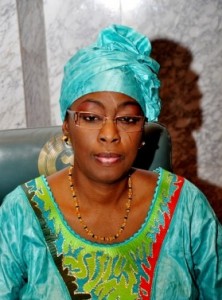
The Department is headed by Mrs. Henrietta
.U. Didigu, who is the Acting Director of the Department.
Divisions of the Department of Humanitarian
and Social Affairs
Units under the Humanitarian Division,
-
Disaster Management Unit:
relates to in the implementation of the ECOWAS Policy
for Disaster Risk Reduction. The Policy is aimed at
advocating for and raising awareness on disaster risk
reduction, integrating risk reduction into development
policies, planning and programmes, developing and
strengthening institutions, mechanisms and capacities to
build resilience to hazards.
It is also aimed at incorporating risk
reduction approaches in emergency preparedness,
rehabilitation and recovery and enhancing the contribution
of disaster reduction to peace and security in the sub
region.
-
The ECOWAS Emergency Response Team (EERT)
Unit:
is designed as a civilian tool to complement Peace
Support Operations and Emergency Response Mechanisms in
West Africa. The members of the EERT located in situ, in
Member States, will be drawn from National NGOs and
staff of relevant government Ministries such as Foreign
Affairs, Internal Affairs and Defense e.t.c of ECOWAS
Member States.
The EERT members will be deployable alone on
ECOWAS missions or along side UN and other International
Agencies to spearhead civilian participation in Peace
Support Operations, complement the ECOWAS Standby Force and
also work in complex emergencies.
Units under the Social Affairs Division,
1.
Trafficking in Persons Unit:
involved in counter trafficking activities within the sub
region and provides Member States with technical support to
fight the trafficking phenomenon, mobilizes resources for
Member States and monitors overall implementation of related
activities of the Region. It also implements the Joint
ECOWAS/ECCAS Plan of Action on Trafficking in Persons.
2.
Health Programme Unit:
This Unit in collaboration with WAHO is implementing the
ECOWAS Health Development Programme. West African Health
Organization (WAHO) is a specialized Institution of ECOWAS
established with a responsibility for health matters in the
region.
3.
Labour Programmes Unit:
is involved in
harmonizing labour laws for the purpose of
creating industrial peace in the region; promoting the
welfare and security of workers for the purpose of regional
integration and development; revitalizing the labour sector
to make it proactive in the regional integration process.
4.
Child Protection Programme Unit:
ECOWAS Child protection programme is devoted to the
protection of the inalienable rights of a child during
conflict and peace times, giving attention to their
physical, mental welfare.
5.
Capacity Building for Public Service
Programme Unit:
It focuses on building professionalism and ethical standards
in the Public Service in the Region. This is based on the
implementation of the African Charter on Public Service. It
provides all the guidelines and codes for ethical standards
in Public Service.
International Partners include: UNHCR, ICRC,
UNODC, ILO, WHO, USAID, EU, UNOCHA, Japanese Embassy,
Swedish Govt. e.t.c
|